Private Pay vs Insurance: Choosing the Right Model for Your Therapy Practice

One of the biggest questions new therapists face is whether to accept insurance, go fully private pay, or build a hybrid model. Each approach has its strengths and its challenges. Private pay offers more freedom and often higher rates, but it can limit who can afford your services. Insurance increases accessibility but adds administrative headaches.
As the How to Start a Private Practice: Ultimate Guide & Checklist explains, the choice you make early on will shape how you run and grow your practice. In this article, we’ll compare private pay, insurance, and hybrid models so you can decide which is the best fit for your goals.
The Pros and Cons of Private Pay
Going 100% private pay gives you the most flexibility and control:
- You set your own rates and can raise them as your practice grows.
- Your revenue isn’t capped by insurance reimbursement rates.
- You may be able to see fewer clients while still meeting your income goals.
For example, Kid Matters Counseling in Chicagoland operates entirely private pay. They even publish their prices online. Because they’ve niched down to working with children ages 2–12, and made a clear philosophical decision, they’ve built a thriving practice without relying on insurance.
The trade-off? Private pay can limit accessibility. Some clients may not be able to afford your rates, so you’ll want to think carefully about your niche and the community you’re serving.
What to Know About Insurance Panels
Paneling with insurance companies can grow your caseload faster because it reduces out-of-pocket costs for clients. But it also comes with challenges:
- Administrative complexity (claims, denials, billing systems).
- Limited flexibility on fees. You get paid what the insurer sets.
- Longer wait times for reimbursement.
If you choose this path, start small. Panel with one or two insurance providers that offer the highest reimbursement rates in your state (often United Healthcare or BlueCross BlueShield).
The more insurance panels you join, the more billing headaches you’ll face. Many therapists find it easier to start with private pay and add insurance later if needed.
Is a Hybrid Model the Best of Both Worlds?
Many practices choose a hybrid approach by accepting some insurance while keeping part of their caseload private pay.
- Cedar Tree Counseling, for example, serves a broad range of clients. They accept private pay and also panel with two insurance companies.
- Other practices choose to panel with several insurers to maximize accessibility, though this increases administrative load.
Hybrid models can provide stability and accessibility, while still leaving room for private pay clients who want flexibility and don’t mind paying out of pocket.
Financial Implications of Each Model
When you’re deciding between private pay and insurance, remember you have two levers to grow revenue:
- See more clients
- Raise your rates
If you’re primarily insurance-based, you can only pull lever #1: seeing more clients. That can lead to limits on income and, eventually, burnout. Scaling typically means hiring additional clinicians.
With private pay, you can pull both levers. You control your rates, which gives you the ability to work fewer hours while maintaining or even increasing income.
Imagine the freedom of working 20 sessions a week instead of 30, and still bringing home the same revenue. That’s the potential of private pay.
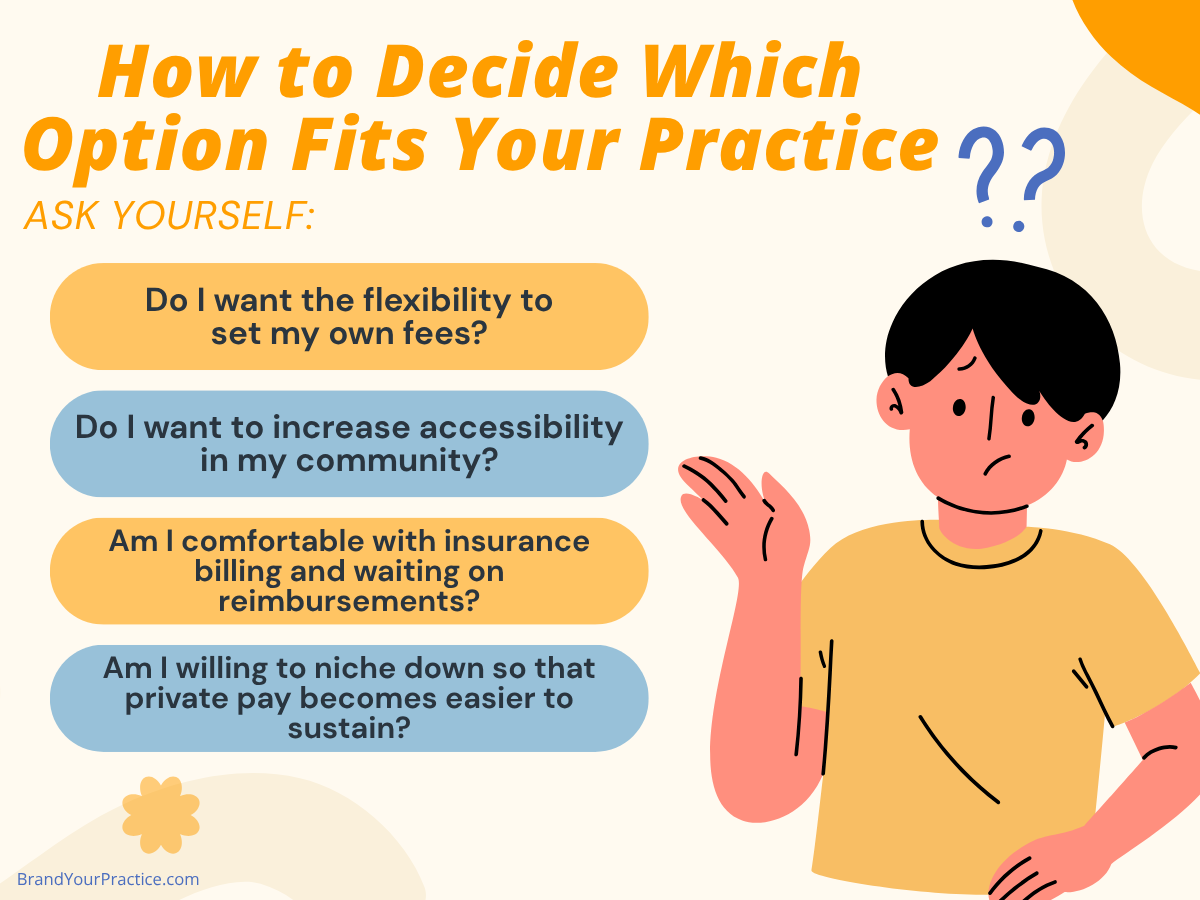
How to Decide Which Option Fits Your Practice
Ask yourself:
- Do I want the flexibility to set my own fees?
- Do I want to increase accessibility in my community?
- Am I comfortable with insurance billing and waiting on reimbursements?
- Am I willing to niche down so that private pay becomes easier to sustain?
Homework: Make an initial decision on how you’ll structure your practice:
- 100% private pay
- Hybrid
- 100% insurance
Don’t stress about getting it perfect. You can always adjust later as your practice grows.
Choosing between private pay and insurance is one of the most important early decisions you’ll make as a practice owner. It affects your finances, your freedom, and the clients you serve. Start with what makes the most sense for your goals. And remember, you can pivot as your practice evolves.
👉 Want more guidance on starting your practice? Explore the full roadmap here:
How to Start a Private Practice: Ultimate Guide & Checklist