How to Budget for Your Private Practice

Launching a private practice involves more than hanging a shingle – it requires financial planning. Without a clear budget, many therapists underestimate expenses and overestimate income. A solid budget helps you anticipate costs, set financial goals, and avoid unnecessary stress.
As the How to Start a Private Practice: Ultimate Guide & Checklist explains, writing down your common business expenses should be part of your business development plan. In this article, we’ll cover the most important costs to plan for and show you how to create a budget that works.
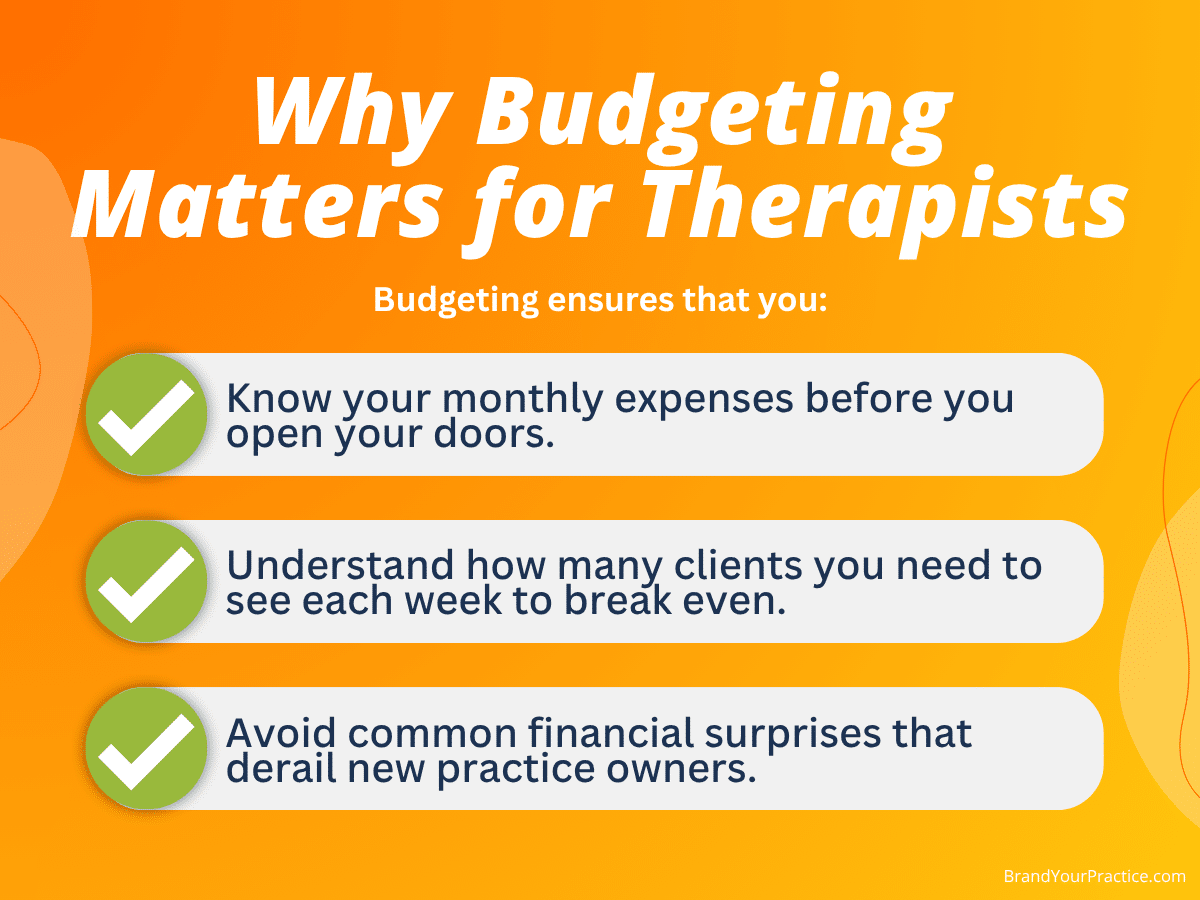
Why Budgeting Matters for Therapists
Budgeting ensures that you:
- Know your monthly expenses before you open your doors.
- Understand how many clients you need to see each week to break even.
- Avoid common financial surprises that derail new practice owners.
With clarity about expenses, you’ll be able to make better decisions about your fees, marketing, and growth plans.
Common Private Practice Expenses
Here are the most common costs to plan for in your budget:
1. Utilities
- Depending on your lease, you may only pay for internet, or you may also cover gas, electricity, and more.
- Expect internet to cost at least $75/month and electricity to range from $30–$50/month, depending on office size.
2. Software
- Includes email (like Gmail), your EHR system, and possibly QuickBooks for accounting.
- These are non-negotiables for managing your practice.
3. Website Hosting
- Costs vary depending on your hosting provider and whether you hire a developer or DIY.
- A professional, SEO-optimized website is essential for attracting clients.
4. Phone System
- Consider tools like Grasshopper for voicemail and call management.
- It masks your personal number, integrates with an app, and scales as your practice grows.
5. Rent
- Try to keep rent as low as possible, especially when starting out.
- Use the guidelines in Find the Perfect Therapy Office Space to decide on the right location.
6. Yearly/One-Time Costs
- Furniture (Wayfair, Goodwill, or Facebook Marketplace are great starting points).
- A copier or printer for your office.
- Professional liability insurance.
7. Marketing (Google Ads, etc.)
- Ads aren’t required, but it’s smart to budget something for marketing.
- Whether it’s Google Ads, social media ads, or print materials, this is how you build awareness.
Creating a Personal Budget
Alongside your business expenses, you’ll need a personal budget. Ask yourself:
- How much money do I need to take home after taxes each month to cover living expenses and student loans?
- How does that number, combined with business expenses, translate into the number of sessions per week I’ll need to see?
This calculation ensures you’re charging enough and building a practice that’s financially sustainable.
Download Your Budget Sheet
To make budgeting easier, we’ve created a preloaded Google Doc with the most common private practice expenses.
👉Download the Budget Sheet Here
Make a copy, fill in your numbers, and use it to project how many clients you’ll need to see to cover your costs.
Adjusting Your Budget as You Grow
Your budget shouldn’t be static. Review it regularly and adjust for:
- Increased caseload
- Additional marketing efforts
- Hiring support staff or clinicians
- Expanding to a larger office
A flexible budget ensures you’re always prepared for growth without financial surprises.
Budgeting may not be the most exciting part of starting a private practice, but it’s one of the most important. By identifying your expenses upfront and using a simple budget sheet, you’ll set yourself up for financial clarity and confidence.
👉For more step-by-step guidance, explore the full roadmap:
How to Start a Private Practice: Ultimate Guide & Checklist