How to Write a Private Practice Business Plan That Works

Many therapists dream about starting their own practice, but few take the time to put their vision into a business plan. A well-written plan is more than a formality; it’s your roadmap for financial stability and growth. Without one, it’s easy to overspend, undercharge, or struggle with inconsistent marketing.
As the How to Start a Private Practice: Ultimate Guide & Checklist explains, a business plan gives your counseling practice clarity and solid boundaries to make important decisions. In this article, we’ll walk through what to include in your plan and how to use it to build a thriving practice.
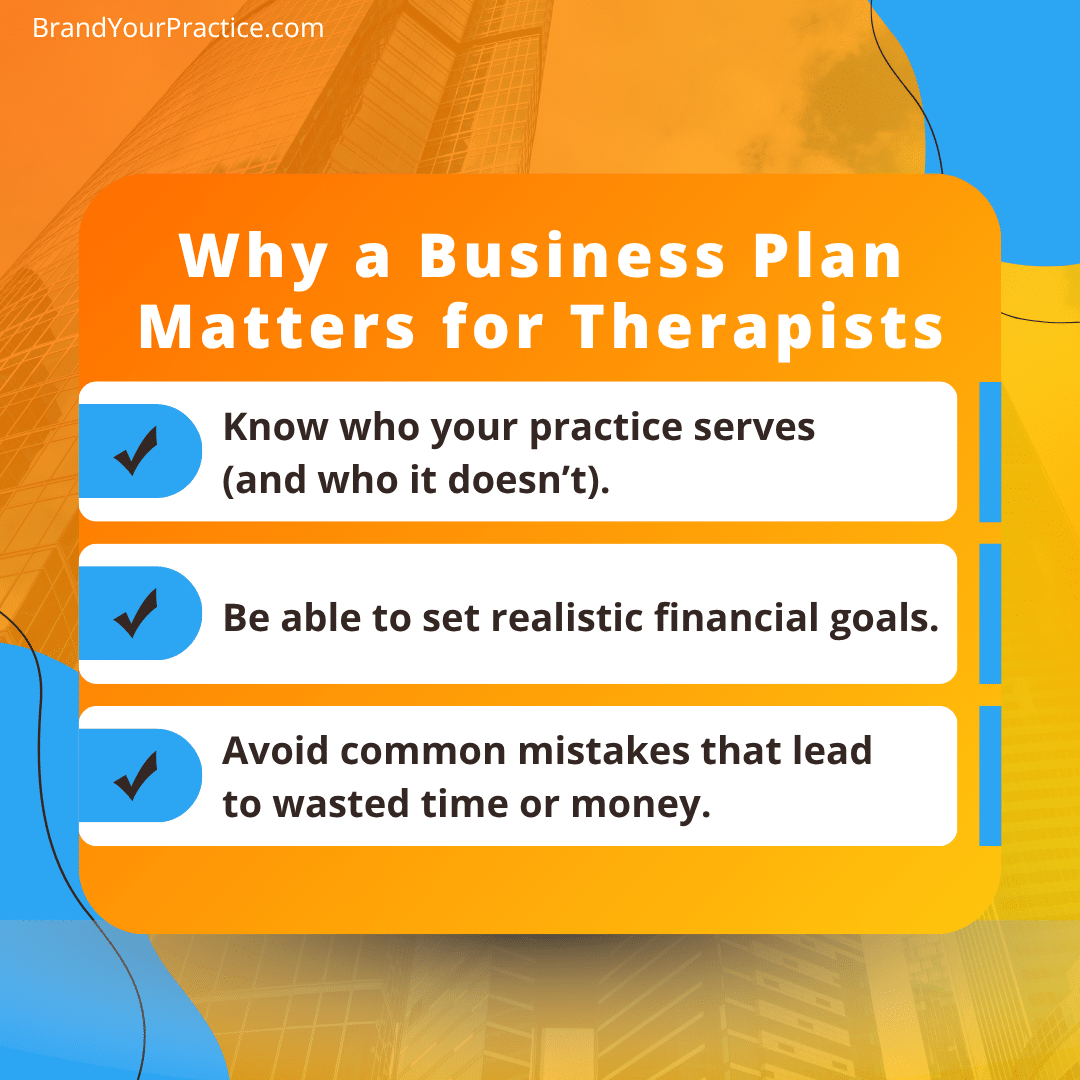
Why a Business Plan Matters for Therapists
A business plan isn’t about filling out a template for a bank loan, it’s about creating clarity. With one in place, you’ll:
- Know who your practice serves (and who it doesn’t).
- Be able to set realistic financial goals.
- Avoid common mistakes that lead to wasted time or money.
Think of it as a roadmap: you can always adjust along the way, but without it, you’re driving blind.
Step 1: Define Your Ideal Client
The first question to answer is: Who is your ideal client and what problem are you trying to solve for them?
Be as detailed as possible. Consider:
- Age, life stage, or demographic details.
- Their pain points (anxiety, relationship stress, trauma recovery, etc.).
- What they’re searching for when they look for a therapist.
The clearer you are here, the easier it will be to design services, write your website copy, and market your practice.
Step 2: Set Your Rates & Decide on Insurance
Next, determine your private pay rate and decide whether you’ll panel with insurance companies.
- Private pay: Simpler billing, more control over your fees, less admin work
- Insurance: Increases client accessibility, but requires credentialing and adds administrative work.
This decision will affect your financial projections and marketing approach (and it’s covered more deeply in the How to Convert to 100% Private Pay for Therapists ultimate guide).
Step 3: Choose an Office Location
If you’ll be seeing clients in person, your location matters. Most therapy practices don’t need a lot of space or furniture to get started, unless you’re a play therapist or dance therapist.
Here are a few things to consider when choosing a space:
- Is there ample parking for clients?
- Is it easy to get in and out of the parking lot?
- Is the office accessible and convenient for your ideal client?
💡Tip: Even if you plan to start with telehealth, think ahead about whether you’ll eventually want in-person sessions.
Step 4: Create an Estimated Expense List
Every practice has startup and ongoing costs. Your estimated expense list should include things like:
- Rent and utilities
- Furniture and office décor
- EHR software
- Marketing expenses
- Professional liability insurance
To make this easier, here’s an expenses template I use with clients to get you started.
Step 5: Create a Personal Budget
It’s not enough to only cover business costs. You also need to know how much income you require for your personal life. Write down:
“I need to take home, after taxes, $________ per month to cover my personal expenses, student loans, etc.”
Then combine this number with your business expense list. From there, you can calculate how many client sessions per week you need to cover both.
Step 6: Learn From Others
Finally, consult with another private practice owner and ask: What mistakes should I avoid?
Learning from someone else’s experience can save you months of trial and error. Whether it’s mispricing sessions, underestimating expenses, or overlooking marketing, their insight can help you avoid costly missteps.
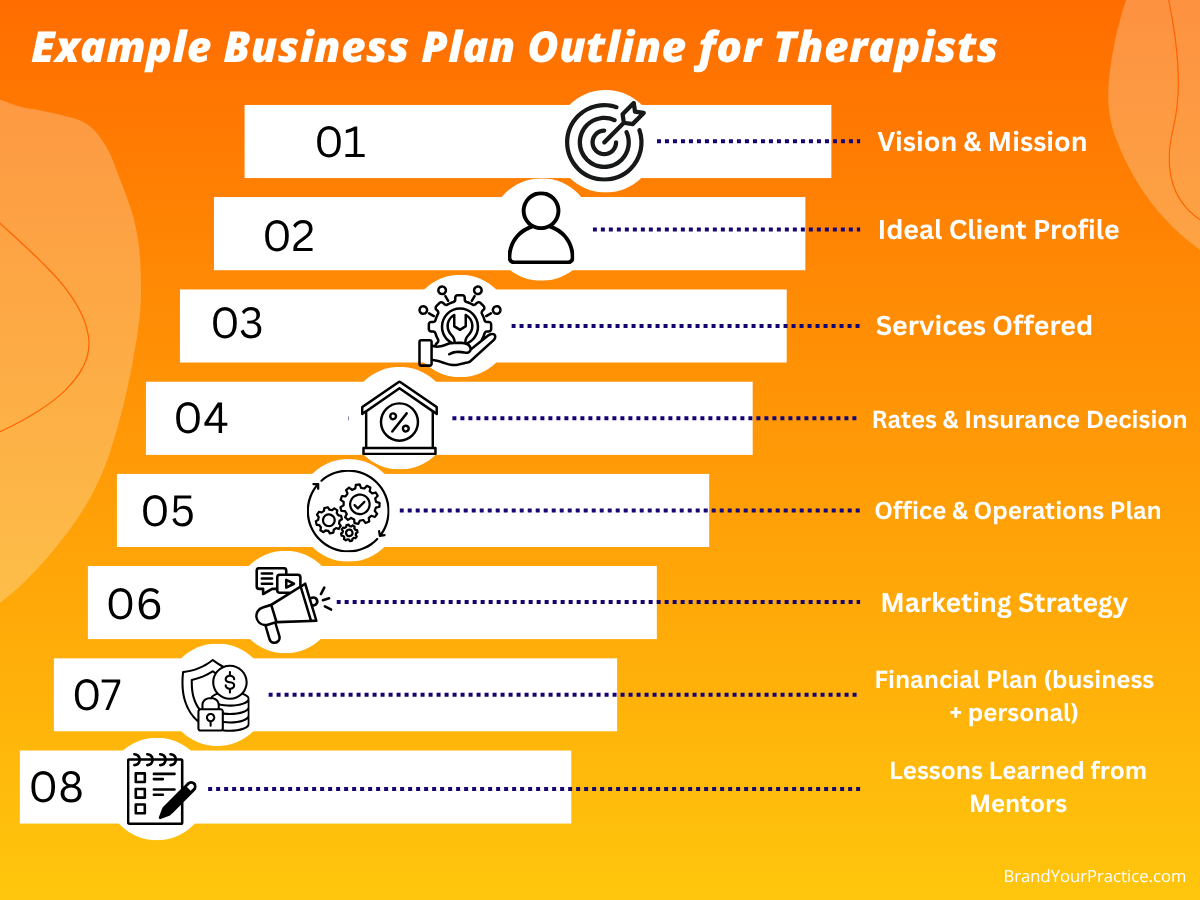
Example Business Plan Outline for Therapists
Here’s a simple framework you can follow:
- Vision & Mission
- Ideal Client Profile
- Services Offered
- Rates & Insurance Decision
- Office & Operations Plan
- Marketing Strategy
- Financial Plan (business + personal)
- Lessons Learned from Mentors
Your business plan doesn’t need to be perfect, but it does need to be written. Use it as a living document that evolves with your practice. It will keep you grounded in your goals, prepared for challenges, and confident in your decisions.
👉For the complete step-by-step roadmap, check out:
How to Start a Private Practice: Ultimate Guide & Checklist