How to Incorporate Your Private Practice: PLLC, S-Corp & More

Choosing how to legally structure your private practice is one of the most important financial and professional decisions you’ll make. The right business entity can protect your personal assets, save you money on taxes, and set you up for long-term growth.
As the How to Start a Private Practice: Ultimate Guide & Checklist explains, if you want to start a business, you need to incorporate it. Incorporation provides legal protection and built-in tax advantages. In this article, we’ll cover the basics of incorporating your private practice and what options may be right for you.
Why Incorporation Matters for Therapists
Incorporating your practice separates your personal assets from your business assets, which means your home, savings, or car aren’t at risk if something goes wrong with the business.
It also opens the door to tax advantages. Many therapists find that pass-through tax entities like an S-Corp allow them to reduce their tax burden.
In short: incorporating your practice is about legal protection + smart financial planning.
Common Business Structures for Private Practices
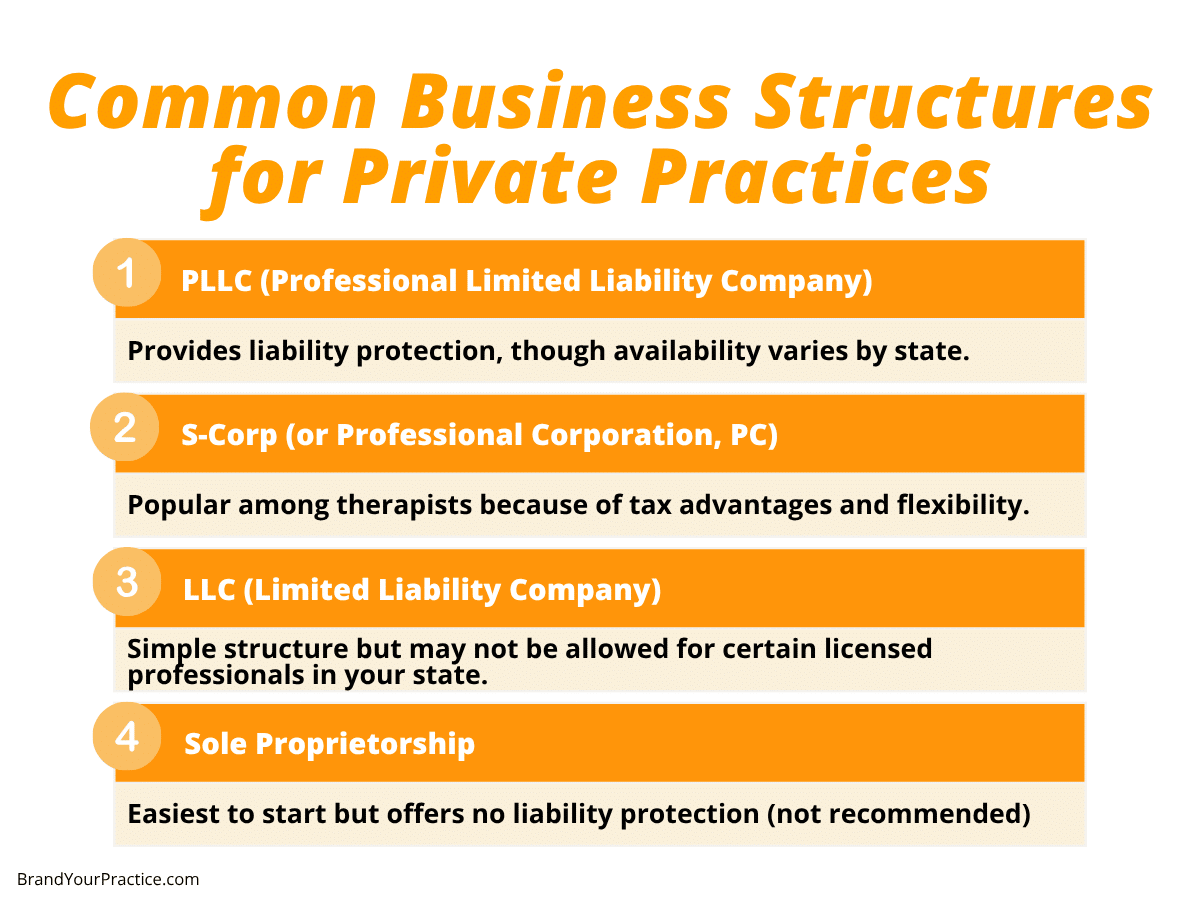
Each state has its own rules for how licensed professionals can incorporate. Some of the most common structures include:
- PLLC (Professional Limited Liability Company): Provides liability protection, though availability varies by state.
- S-Corp (or Professional Corporation, PC): Popular among therapists because of tax advantages and flexibility.
- LLC (Limited Liability Company): Simple structure but may not be allowed for certain licensed professionals in your state.
- Sole Proprietorship: Easiest to start but offers no liability protection (not recommended).
👉Example: In Illinois, counselors must register as a Professional Corporation (PC) - essentially an S-Corp with a professional designation.
Tax Implications of Different Entities
- Sole Proprietorship: All income is taxed as personal income; no liability protection.
- LLC/PLLC: Liability protection, but you’ll want to check with your accountant about how it impacts taxes in your state.
- S-Corp/PC: Pass-through taxation, potential tax savings, and the ability to pay yourself a salary plus distributions.
💡Many practices find that incorporating as a pass-through tax entity (like an S-Corp) provides the best balance of protection and tax savings.
Steps to Incorporate Your Practice
Here are three common ways to incorporate your counseling practice:
- Hire a Lawyer or Accountant
- Cost: $500–$1500
- Some accounting firms include incorporation if you already use them for taxes.
- Best option if you’re starting with a partner, always consult a lawyer to draft paperwork.
- Register Online
- Services like LegalZoom or Swyft Filings can save time and money.
- I’ve personally used Swyft Filings for several businesses and counseling practices.
- Get Your EIN (Employer Identification Number)
- Think of it as a Social Security Number for your business.
- You’ll need it to open business bank accounts and file taxes.
- You can request one directly from the IRS.
When to Get Legal or Financial Advice
If you’re starting with 100% ownership, incorporating can be fairly straightforward. But if you’re launching with a partner or group, it’s essential to consult a lawyer to ensure paperwork is set up correctly.
And regardless of ownership, always check with a tax accountant to confirm which incorporation structure offers the best advantages in your state.
Incorporating your private practice is one of the smartest steps you can take as a new business owner. It protects your personal assets, sets up tax benefits, and positions your practice for growth.
👉For more guidance on building your practice step by step, explore the full guide:
How to Start a Private Practice: Ultimate Guide & Checklist